Ethiopian Civil War
Civil war in Ethiopia and Eritrea, 1974–1991, ending Derg rule.

The Ethiopian Civil War was a conflict in Ethiopia and present-day Eritrea fought between the Ethiopian military junta known as the Derg and various Ethiopian-Eritrean anti-government rebels from 12 September 1974 to 28 May 1991. The war began when the Derg overthrew Emperor Haile Selassie in a coup d'état, establishing Ethiopia as a Marxist–Leninist state. The conflict involved multiple rebel groups of differing ideologies and ethnic backgrounds, and ended with the Derg's dissolution and the entry of the Ethiopian People's Revolutionary Democratic Front (EPRDF) into Addis Ababa.
- start_date
- 12 September 1974
- end_date
- 28 May 1991
- location
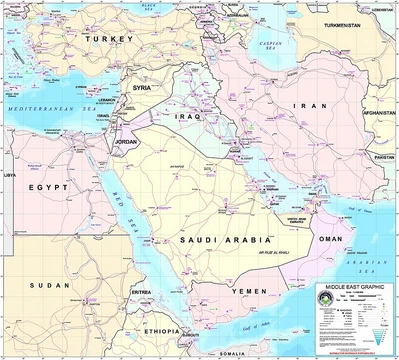
- Ethiopia and present-day Eritrea
- belligerents
- Derg (Ethiopian military junta) vs. Ethiopian-Eritrean anti-government rebels
- result
- EPRDF victory; Derg dissolved; Transitional Government of Ethiopia established
- estimated_deaths
- At least 1.4 million (1 million famine-related, remainder from combat and other violence)
Lore & Background
The Derg overthrew the Ethiopian Empire and Emperor Haile Selassie on 12 September 1974, establishing a Marxist–Leninist state under a military junta. Various nationalist opposition groups, including the Eritrean People's Liberation Front (EPLF), Western Somali Liberation Front (WSLF), Tigrayan People's Liberation Front (TPLF), and Oromo Liberation Front (OLF), carried out armed resistance. The Derg used large-scale counterinsurgency campaigns and the Qey Shibir (Red Terror) to repress rebels. By the mid-1980s, issues such as the 1983–1985 famine and economic decline increased popular support for rebels. The Derg dissolved its military junta in 1987, becoming the People's Democratic Republic of Ethiopia under the Workers' Party of Ethiopia, but the Soviet Union ended support in the late 1980s. The war ended on 28 May 1991 when the EPRDF entered Addis Ababa and President Mengistu Haile Mariam fled.
Reader's Guide
The Ethiopian Civil War was a pivotal conflict that reshaped the Horn of Africa, ending the long rule of the Ethiopian Empire and the subsequent Marxist–Leninist Derg regime. The war's roots lay in growing discontent under Emperor Haile Selassie, with a radicalized student movement, regional revolts in Eritrea and Ogaden, and a politicized military. The Derg's violent consolidation of power through the Red Terror and its counterinsurgency campaigns caused immense suffering, while the 1983–1985 famine exacerbated the crisis. The involvement of external powers, such as the Soviet Union and Cuba, highlighted Cold War dynamics. The war's conclusion with the EPRDF's victory led to the establishment of a transitional government and the independence of Eritrea. The conflict left at least 1.4 million dead, with famine accounting for the majority of casualties, and its legacy continues to influence Ethiopian politics and regional stability.
Did You Know?
- The Ethiopian Civil War lasted from 12 September 1974 to 28 May 1991.
- The Derg used the Qey Shibir (Red Terror) to repress rebels.
- At least 1.4 million people died in the war, with 1 million deaths related to famine.
- The war ended when the Ethiopian People's Revolutionary Democratic Front (EPRDF) entered Addis Ababa and President Mengistu Haile Mariam fled.
The Unraveling of a Dominant Coalition
The modern Ethiopian civil conflict traces its origins to the 2018 collapse of the EPRDF, the ethnic federalist coalition that had dominated governance for decades. After two decades of border war with Eritrea, a decade of internal friction, two years of mass protests, and a declared state of emergency, Prime Minister Hailemariam Desalegn stepped down on 15 February 2018. His 42-year-old successor, Abiy Ahmed, was confirmed by parliament on 2 April. Abiy moved swiftly to reshape the political landscape: he overhauled economic policy, freed political prisoners, permitted exiles to return, loosened press controls, and allowed diverse opposition groups to organize openly. His diplomatic breakthrough in ending the two-year border war with Eritrea earned him the 2019 Nobel Peace Prize. Abiy's plan, outlined in his 2019 book Medemer, was to dissolve all ethnic-based parties into a single national Prosperity Party. Rather than easing tensions, this consolidation intensified competition and resentment among former coalition partners, pushing the country deeper into interethnic polarization and violence.
The Tigray War and Shifting Alliances
The Ethiopian National Defense Force, joined by Eritrean Defence Forces, advanced into and occupied Mekelle, the regional capital. The agreement ended the most intense phase of the conflict, yet it did not restore stability across the country. Sporadic armed confrontations persisted in multiple regions, and the human cost of the war—substantial rights violations, documented war crimes, and extrajudicial killings—left deep scars on communities throughout Ethiopia.
The Roots of Ethnic Federalism
Most scholars trace Ethiopia's recurring internal violence to the legacy of Abyssinian expansionism under Emperor Menelik II in the late nineteenth and early twentieth centuries, a period that fractured a plural ethnic landscape into competing multiethnic states. Menelik II compelled regional lords in areas now known as Jimma, Benishangul-Gumuz, Wellega, and Bale to remit taxes to the Shewan government, a system historians view as a prototype of today's federalism. The current flashpoint, many scholars argue, is the ethnic federalism implemented in 1991. The EPRDF championed the model, believing that granting ethnolinguistic groups autonomy within a unified state would ensure lasting peace. Critics, particularly Ethiopian nationalist groups, contend the system politicized tribal identity and should be replaced with a framework treating individuals as the primary subjects of political order.
Violence Beyond the Tigray Front
The civil conflict extended far beyond the Tigray front. In the Amhara Region, violence took a particularly brutal turn on 10–11 January 2019, when Fano militia members killed 58 Qemant people in a massacre the Ethiopian National Defense Force failed to prevent. The plot opened with targeted assassinations of senior political and military figures, including Se'are Mekonnen, Chief of the General Staff, Gizae Aberra, his aide-de-camp, and Ambachew Mekonnen, Chief Administrator of the Amhara Region. The coup collapsed when police killed Asaminew Tsige. In the aftermath of the Tigray peace, the OLA insurgency, the Fano insurgency, and the Gambela conflict continued to destabilize the country, demonstrating that the broader civil war remained far from over.
Frequently Asked Questions
What is the Ethiopian Civil War?
It was a nearly seventeen-year armed conflict, running from September 1974 to May 1991, in which the Marxist-Leninist Derg junta clashed with a patchwork of Ethiopian and Eritrean rebel factions across Ethiopia and present-day Eritrea. The fighting ignited after the Derg's 1974 coup that deposed Emperor Haile Selassie and converted the state into a one-party socialist regime.
Who were the main belligerents in the Ethiopian Civil War?
The Derg, an Ethiopian military junta ruling as a Marxist-Leninist government, stood on one side, while a diverse array of anti-government rebel groups of varied ethnic and ideological backgrounds fought on the other. The EPRDF, a coalition of Ethiopian and Eritrean opposition forces, ultimately became the decisive rebel bloc.
How does the Ethiopian Civil War end?
The war closed on 28 May 1991 when EPRDF forces entered Addis Ababa, compelling the Derg to disband and surrender authority. A Transitional Government of Ethiopia was subsequently formed to steer the country through its political transition.
Why is the Ethiopian Civil War important?
With at least 1.4 million estimated deaths—roughly one million from famine and the rest from combat and related violence—it ranks among the deadliest internal conflicts in modern African history. Its outcome redrew the political map of the Horn of Africa and set the stage for Eritrea's path to sovereignty.
When and where did the Ethiopian Civil War take place?
Hostilities ran from 12 September 1974 through 28 May 1991 across the territories of Ethiopia and what is now the independent state of Eritrea. The conflict's long duration and multi-faction nature made it one of the most protracted civil wars in the region's modern era.
More in Modern Conflicts 1-15
Spotted an error? Know more?
This is a living reference — every entry is fact-audited, and reader corrections feed straight into our audit queue. Suggest an edit · See this site's audit record